+001Personal and family identities.

The zero stands for zero scammers.

Every address on the Dial Number Network begins with a zero, and none of them sit on the public phone network. A machine cannot dial a number its network does not carry, so the calls that made your phone useless never place at all.

+001-48-21093-70012

Fifteen digits, starting with a zero. The 01 says a person holds it: +001 is the part of the namespace kept for people and their families. There is no area code, because there is no area.

The public network

It was never built to keep anybody out.

Four things are established and on the record. None of them are our claims, each one links to the document it comes from, and none of them describe a problem you could have prevented at your end.

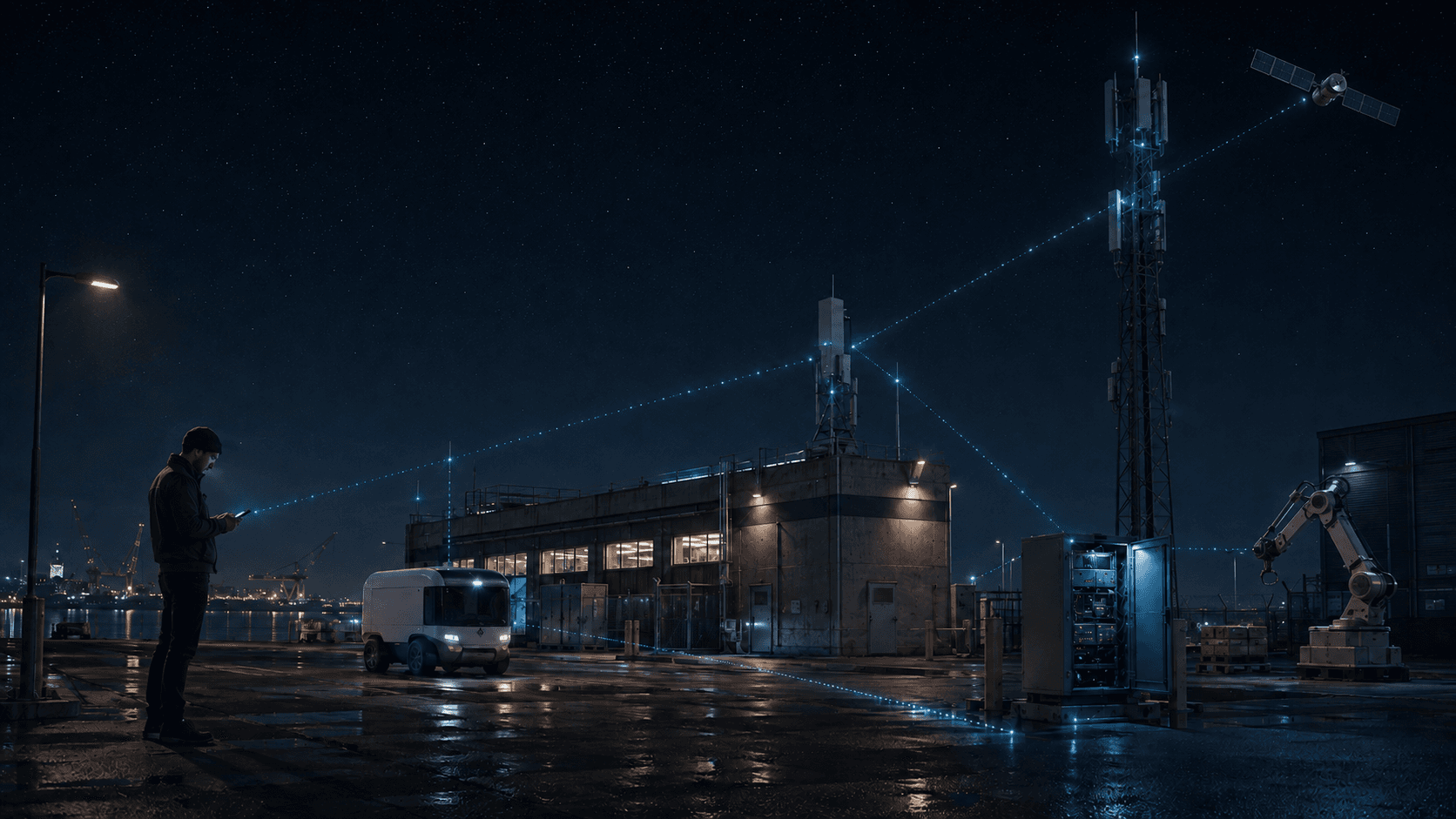
Carrier towers, satellite dish and an edge cabinet at an industrial site at night
The layer the break-in happened at. Everything above it — your handset, your apps, your settings — was downstream of it.
  1. The break-in was at the carriers, not at the phones.

    In August 2025, CISA, the NSA, the FBI and partner agencies across sixteen countries published a joint advisory on Chinese state-sponsored actors operating inside telecommunications networks worldwide. It was upstream of every handset on those networks. Nothing anybody did to their own phone would have kept them out of it.

    CISA, NSA, FBI and partner agenciesCountering Chinese State-Sponsored Actors Compromise of Networks Worldwide, 27 August 2025
  2. What was collected was the record of who you call.

    The advisory lists subscriber information, customer records and metadata, and user content among what the actors took. Metadata is not what you said. It is who you called, when, how often and from roughly where — which for most people is the more revealing of the two.

    CISA, NSA, FBI and partner agenciesCountering Chinese State-Sponsored Actors Compromise of Networks Worldwide, 27 August 2025
  3. The wiretap system was the door.

    At a Senate Commerce hearing in December 2025, Senator Cantwell put the count at nine or more U.S. telecom companies, AT&T and Verizon among them, and described the court-ordered wiretap systems carriers are required by law to run as the open door. A capability built for lawful access is a capability, whoever ends up holding it.

    U.S. Senate Committee on Commerce, Science & TransportationExperts Agree U.S. Communications Networks Remain Vulnerable Following Salt Typhoon Hack, 2 December 2025
  4. The official advice was to stop trusting the line.

    CISA's mobile guidance, written for the people most likely to be targeted, comes down to one instruction: treat the network in the middle as untrusted, and use end-to-end encryption over the top of it. That is good advice, and it concedes the part worth noticing — the number itself, and everything the network records about it, was never yours to secure.

    CISAMobile Communications Best Practice Guidance, 18 December 2024

You cannot secure a number that a hundred thousand machines already have. You can stop using it for the people who matter.

What a +0 number does

Not a better filter. A different network.

A spam blocker works after the call arrives, on a number anybody can reach. This works earlier than that, and the difference is the whole product.

It is not on the public network.

Every Dial address begins +0, inside a private namespace. There is no route into it from a carrier line, so a robocaller cannot dial one, a list broker cannot have sold one, and no carrier holds a record of a call to one. This is not a filter that catches the calls. It is the absence of a road.

A stranger never gets as far as your phone.

Policy is applied before a destination is chosen, so somebody you have never answered is screened without learning where the number would have rung. Known contacts ring. Unknown callers are screened. Out of hours goes to voicemail. Those are the defaults, and in every case the safe answer is the default.

The list of who gets through is one you wrote.

A caller counts as known because you answered them. Nothing is inherited from an address book you imported once and forgot, and nothing is inferred on your behalf. All of it is on the number's own screen, and all of it can be changed there.

It rings whatever you point it at.

The Dial app, voicemail, a SIP handset or PBX you already run, or another address on this network. People who each hold an address here reach each other by address, and that is the whole of the circle: no group, no invite link, no directory to be in.

Set up the circle

One each, for the people who matter.

A private network of a dozen people is not a product with a group feature in it. It is a dozen addresses that only answer to each other.

  1. 01

    Take one for yourself.

    Registration asks four things: who it is for, where we reach you, the number you want, and what it is going to be used for. It comes back issued or pending review, and the screen tells you which.

  2. 02

    One each, rather than one shared.

    Everybody in the circle registers their own address in +001, the part of the namespace kept for personal and family identities. They reach each other by address, and reach nobody else unless they decide to.

  3. 03

    Hand it out by hand.

    The value is entirely in who does not have it. It goes to the people you would want ringing at eleven at night, and to nobody who asks for a phone number in a form field.

  4. 04

    Keep your old number. Let it take the abuse.

    The carrier line stays exactly where it is: deliveries, forms, the dentist, the DMV, and 911. It is already on the lists and nothing here takes it off them. What changes is that it stops being the number your family uses to reach you.

What it is not

The part most pages this shape leave out.

Everything above is worth nothing if any of this comes as a surprise later. It is the same wording as the terms, on purpose.

It does not carry emergency calls
You cannot reach 911, 112 or any other emergency service through a Dial number, and no emergency service can call you back on one. Keep a working phone. This one is important enough that we will not bury it.
It is not a phone line
Numbers in the +0 namespace are not part of the public switched telephone network. They are not portable to a carrier, and they are not a replacement for the line you have.
Voice is the channel that is live
SIP voice is what a +0 number carries today. Text and the messaging apps wait on gateways that do not exist yet, and every screen that lists them says which is which rather than implying they all work.
It is not encryption
We are not selling you a cipher, and a private number is not a private conversation. We route what arrives at your address, and the privacy policy says what we hold while doing it. The claim on this page is narrower than an encryption claim, and it survives being checked: your number is not on the network that was breached.
It is early
Parts of the service are in testing. Features change, and we will tell you before we remove one you are using.

All of it is written out in the terms of service and the privacy policy, which say what we hold and for how long.

Get a number of your own.

Nobody gets it unless you give it to them.